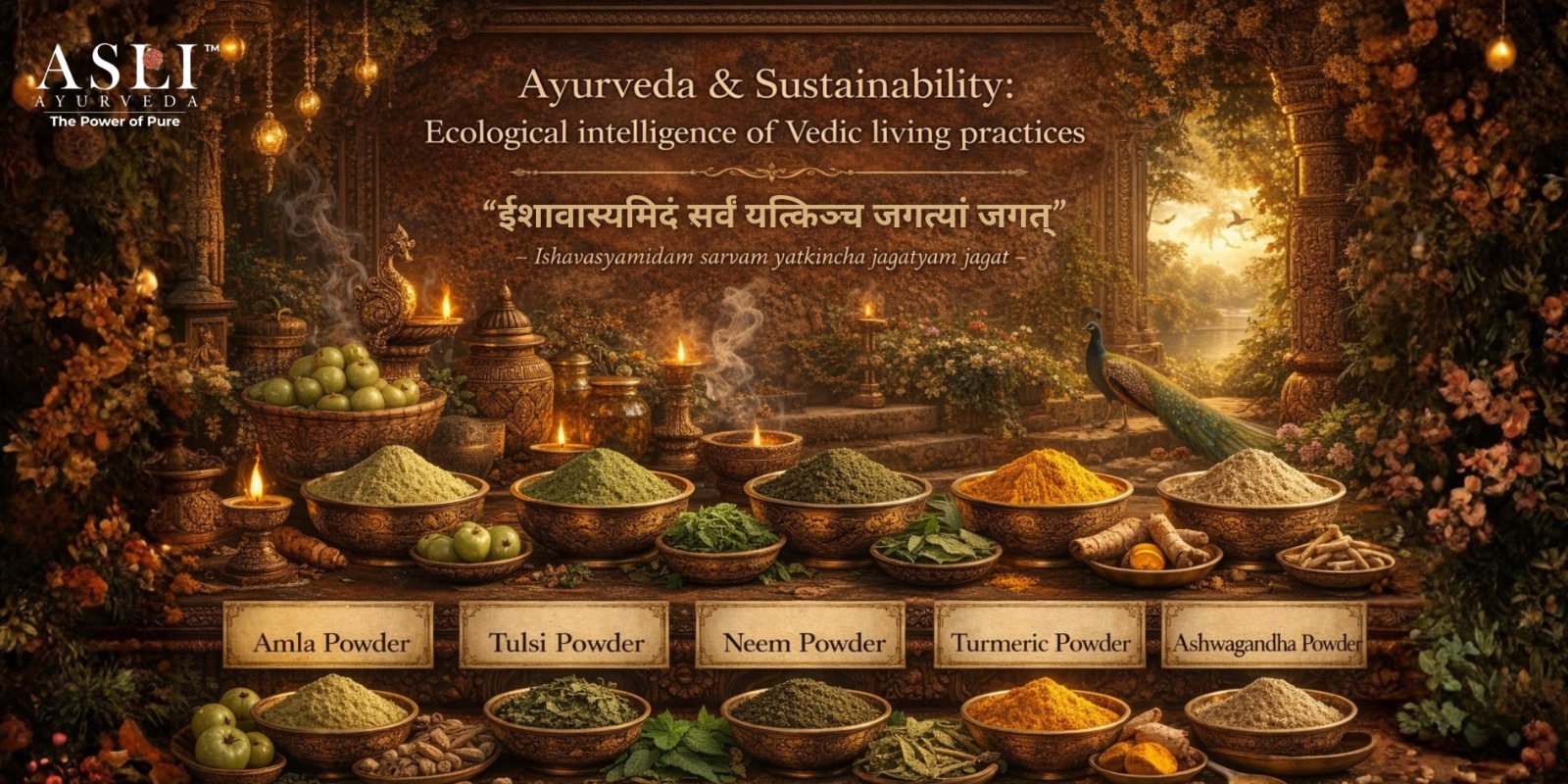
Long before the, ecology, or climate consciousness entered modern discourse, the Vedic seers words sustainability had already articulated a profound truth: human life is inseparable from nature. The Earth is not a resource to be exploited but a living system to be respected, nourished, and protected.
Ayurveda, born from the Atharva Veda, is not merely a healthcare system — it is an ecological science of living. Every Ayurvedic principle, from diet to medicine, is rooted in balance with the environment. In this sense, Ayurveda may be the world’s oldest and most complete sustainability framework.We will explores Ayurveda and sustainability through the lens of Vedic ecological intelligence and how ASLI AYURVEDA embodies these timeless principles in modern practice.
“ईशावास्यमिदं सर्वं यत्किञ्च जगत्यां जगत्”
All that exists in this universe is pervaded by the Divine.
….Isha Upanishad….
The Ecological Intelligence of Ayurveda
Ayurveda, the ancient science of life, is based on the concept of balance — balance within the body, mind, and spirit, and balance with the natural world. The Vedic teachings present a holistic view of the universe, where humans are seen as integral to the earth’s ecological system. In Ayurveda, health is not just the absence of disease but the alignment of an individual’s energies with the natural rhythms of the world. This approach fosters an understanding of sustainability that is deeply rooted in the interconnectedness of all living things.
Key Concepts of Ecological Intelligence in Ayurveda:
- Interdependence of All Life: Ayurveda teaches that the health of humans is intrinsically linked to the health of the environment. This connection means that respecting nature and living in harmony with it ensures long-term well-being for all living beings.
- Nature as the Source of Healing: Herbs, plants, and natural elements are the foundation of Ayurvedic medicine. By using natural remedies that have minimal environmental impact, Ayurveda advocates for healing that is not only beneficial to the individual but also to the planet.
- Seasonal Living: Ayurveda emphasizes living in tune with the seasons. By adapting one’s diet, activities, and lifestyle according to the changing seasons, we naturally align ourselves with the cycles of nature, reducing our environmental footprint.
- Sustainable Agriculture: Ayurveda encourages organic farming and the use of sustainably sourced herbs, ensuring that medicinal plants are grown in harmony with the Earth, without depleting its resources.
Ecological Intelligence of Ayurvedic Herbs
Ayurvedic herbs are not chemically isolated substances — they are botanical intelligences shaped by soil, climate, and cosmic rhythms.
Each herb carries:
- Rasa (taste ecology)
- Guna (functional qualities)
- Virya (energetic potency)
- Vipaka (post-digestive impact)
For example:
- Amla grows naturally in specific Indian climates and supports immunity without exhausting ecosystems.
- Tulsi is regenerative, sacred, and improves air quality.
- Neem is antimicrobial, pest-resistant, and soil-friendly.
- Turmeric, with its healing properties, is cultivated with little water and is a naturally pesticide-free crop.
- Ashwagandha helps reduce stress and boosts vitality, while its cultivation requires minimal water and chemical input.
Ayurveda selects herbs that heal humans without harming nature.
Modern Science Meets Vedic Sustainability
Today, science confirms what the Vedas taught:
- Biodiversity improves resilience
- Soil health determines human nutrition
- Chemical overuse depletes ecosystems
- Local food systems reduce carbon footprint
- Plant-based systems are more sustainable
Ayurveda is now recognized globally as a regenerative health science, not just an alternative medicine.
ASLI AYURVEDA Sustainable Practices
Our Ecological Commitments:
At ASLI AYURVEDA, sustainability is not just a goal; it is a commitment to our planet and future generations. We embrace the ecological intelligence of Ayurveda, integrating these practices into every aspect of our operations. From our sourcing methods to our product formulations, we make choices that benefit both human health and environmental well-being.
1. Ethical Sourcing of Ingredients
We prioritize sustainable sourcing of herbs and ingredients from organic farms that follow traditional and ethical agricultural practices. This ensures:
- Minimal environmental impact by using regenerative farming methods that preserve soil health.
- Fair trade practices, ensuring fair compensation and respect for local communities involved in the cultivation of herbs.
- No chemical pesticides or synthetic fertilizers, which are harmful to both the environment and human health.
2. Eco-friendly Packaging
We are committed to reducing our carbon footprint and waste:
- Biodegradable and recyclable packaging materials to minimize plastic waste.
- Glass and metal containers that are reusable, providing sustainable alternatives to single-use plastic.
- Minimal packaging designs to reduce unnecessary material usage.
3. Energy-efficient Manufacturing
Our manufacturing facilities are designed with sustainability in mind:
- Zed Gold–certified greenroom processes to ensure that energy consumption is minimized during production.
- Solar-powered energy systems to reduce reliance on non-renewable energy sources.
- Waste reduction programs that minimize water and energy consumption during production.
4. Preserving the Purity of Nature
We uphold the Vedic concept of purity in all our products:
- Clean-label standards with no synthetic additives or chemicals.
- Holistic formulations that respect the natural essence of herbs and maintain their therapeutic properties.
- Natural preservation methods that ensure the longevity of products without harming the environment.
5. Supporting Local Communities
We work closely with local farmers and communities to ensure:
- Fair compensation and training for sustainable farming practices.
- Empowerment programs for local communities, ensuring that their livelihoods are supported without exploiting natural resources.
- Preservation of indigenous knowledge related to herbs, strengthening the connection between traditional wisdom and modern practices.
Practical Vedic Sustainability You Can Practice Daily
You don’t need to change the world overnight. Ayurveda teaches small, conscious shifts:
1. Eat Seasonally
Your body and the planet thrive when you eat what grows naturally in that season.
2. Reduce Over-Supplementation
Ayurveda believes in right dosage, right time, not excess consumption.
3. Align With Natural Rhythms
Sleep early, rise early — reduce energy wastage.
4. Cultivate Gratitude
Respect for nature begins with awareness.
Sustainability Is Dharma
In Vedic thought, protecting nature is Dharma, not activism.
- To harm the Earth is to harm ourselves.
- To heal nature is to heal humanity.
Ayurveda stands as a reminder that true progress is harmony, not exploitation.
Conclusion:
The future of sustainability does not lie in new inventions alone — it lies in remembering ancient wisdom.
Ayurveda offers a blueprint where:
- Health is ecological
- Medicine is regenerative
- Consumption is conscious
- Living is sacred
At ASLI AYURVEDA, we are committed to preserving this wisdom — pure, authentic, and responsible — for a world that urgently needs balance.
For Founders (B2B)
Start Your Ayurvedic Brand with ASLI AYURVEDA
Leverage our expertise in Classical Ayurveda, Herbal Cosmetics & Nutraceutical Manufacturing.
For Consumers (D2C)
Shop Authentic Ayurvedic Products
Discover the purity and potency of our Ayurvedic offerings, including:
- Premium Shilajit Resin
- Traditional Triphala Powder
- Shatavari Powder
- Brahmi Powder
And much more from ASLI AYURVEDA’s sacred collection.