

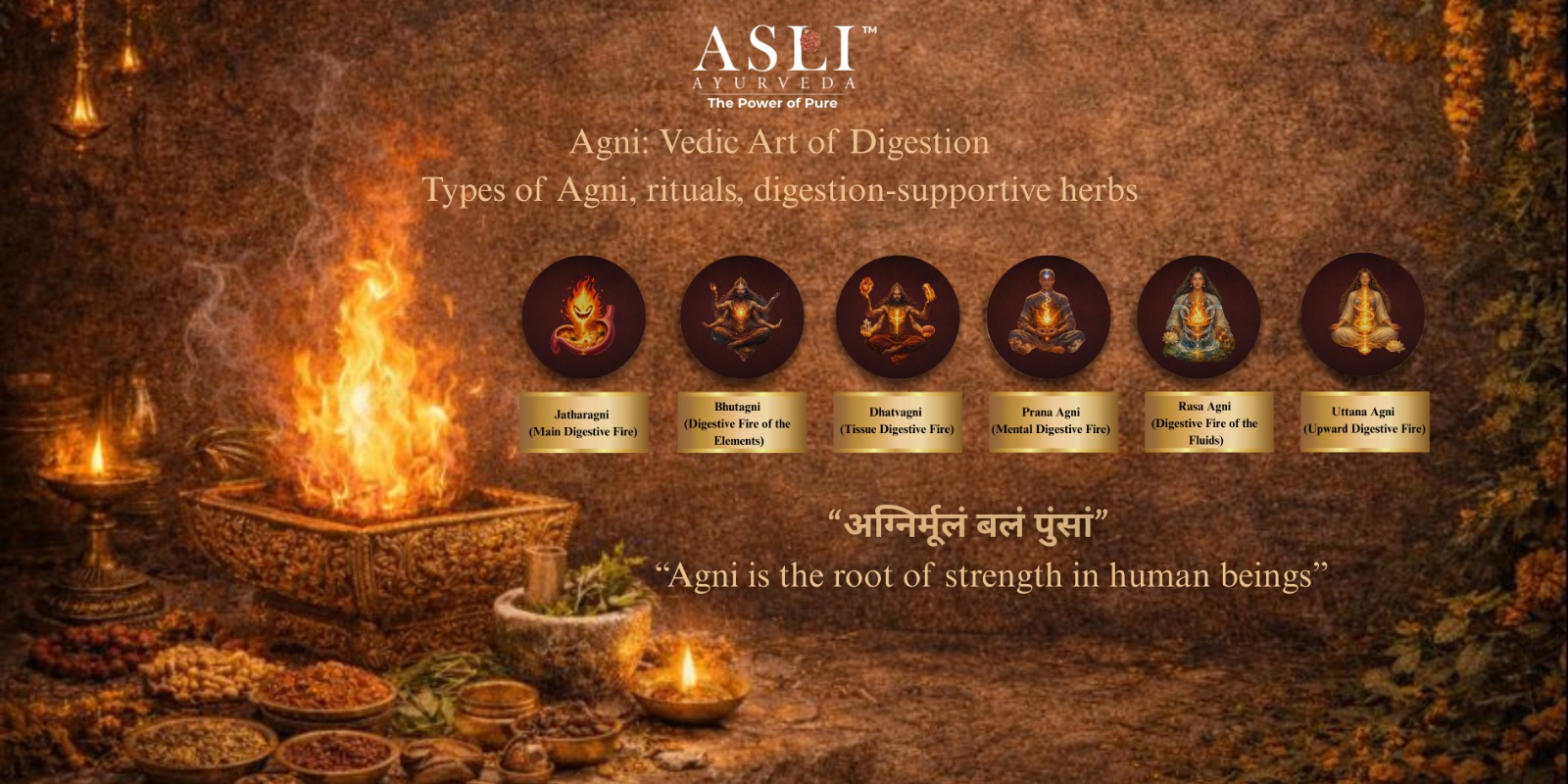
In the Vedic worldview, Agni is not just fire. It is the cosmic force of transformation — the energy that fuels creation, digestion, and consciousness. Agni is the source of life, not only as the literal digestive fire but also as the metabolic process within every cell.
In Ayurveda, Agni governs digestion and metabolism, and it is considered the foundation of physical, mental, and spiritual health. The Vedic art of Agni is based on understanding its various types and nurturing it through specific rituals, lifestyle practices, and herbs.We will dive deep into the Vedic concept of Agni, explore the different types of Agni, and discuss the rituals and herbs that support digestion and metabolism, aligned with the ancient wisdom of ASLI AYURVEDA.
“अग्निर्मूलं बलं पुंसां”
“Agni is the root of strength in human beings.”
….Charaka Samhita….
The word Agni literally means fire, but in Ayurvedic terms, it symbolizes digestive fire. It is said that Agni is the very foundation of life, transforming food into energy and sustaining the body, mind, and spirit.In Vedic thought, Agni is seen as the connector between the outer world (food) and the inner world (body). This digestive fire governs not just physical digestion but also the digestion of emotions, thoughts, and experiences. When Agni is in balance, health, vitality, and clarity emerge; when Agni is weak or irregular, disorders and diseases follow.
In Ayurveda, Agni is classified into various types, each governing different aspects of digestion and metabolism. These types of Agni are essential for understanding how digestion works on a deeper level. Let’s explore the six types of Agni as outlined in Ayurvedic texts:
Location: Stomach and digestive tract
Function: Responsible for the digestion of food, it transforms food into nutrients and waste.
“जठराग्निर्मूलं सर्वाग्नीनाम्”
“Jatharagni is the root of all other Agnis”
Location: In the liver and tissues
Function: Responsible for transforming the five elements (earth, water, fire, air, ether) into biological substances such as blood, mucus, and bile.
Location: In the tissues (Dhatus)
Function: Supports the transformation of the seven dhatus (tissues) and helps maintain optimal energy, strength, and vitality.
Location: In the mind and nervous system
Function: Responsible for the digestion of thoughts and mental clarity.
Location: In the lymphatic system and fluids
Function: Responsible for the digestion of bodily fluids, including lymph, blood plasma, and secretions.
Location: In the upper part of the body, particularly the head and brain
Function: Influences cognition, mental processes, and intellect.
Modern science confirms:
Ayurveda understood this thousands of years ago.
Ayurveda teaches:
“Improper digestion converts even nectar into poison.”
The same food:
The difference is Agni, not diet trends.
The Vedic tradition offers specific rituals and practices to enhance and balance Agni. These practices support not only physical digestion but also mental and emotional well-being.
The practice of Agni-Hotra is a sacred fire ritual that purifies the environment and stimulates digestive fire. The ritual involves offerings made to Agni, invoking the blessings of the sun and the elements, creating a harmonious environment that supports digestion.
Sipping warm water helps maintain Jatharagni and supports the digestive process. Ayurveda recommends drinking warm water in small sips to aid the body’s natural detoxification process and ensure the digestive fire remains strong.
Occasional fasting (like Kitchari cleanse) allows Agni to rest and rejuvenate. The practice of intermittent fasting aligns with Ayurvedic teachings and gives Agni a chance to burn away toxins (Ama), which accumulate from poor digestion.
Ayurvedic herbs have been used for centuries to strengthen Agni and support digestion. These herbs are carefully chosen for their warming, stimulating, and detoxifying qualities.
At ASLI AYURVEDA, we honor the timeless principles of Vedic digestion and Agni-strengthening practices. Our formulations are designed to optimize digestive health, detoxification, and mental clarity, utilizing ancient wisdom combined with modern purity standards.
We don’t force digestion — we restore it.
Agni is the silent architect of health.
When Agni is balanced, the body nourishes itself, immunity strengthens naturally, and clarity arises effortlessly. Ayurveda teaches us that caring for Agni is the most powerful form of preventive medicine.
In a world chasing quick fixes, Agni teaches wisdom.
At ASLI AYURVEDA, we invite you to reconnect with the timeless science of Agni for true vitality and lasting health.
Leverage our expertise in Classical Ayurveda, Herbal Cosmetics & Nutraceutical Manufacturing.
Discover the purity and potency of our Ayurvedic offerings, including:
And much more from ASLI AYURVEDA’s sacred collection.
Email Us On namaste@asliayurveda.com
Call Us +919215510001
How To Launch A Global Ayurvedic Brand?